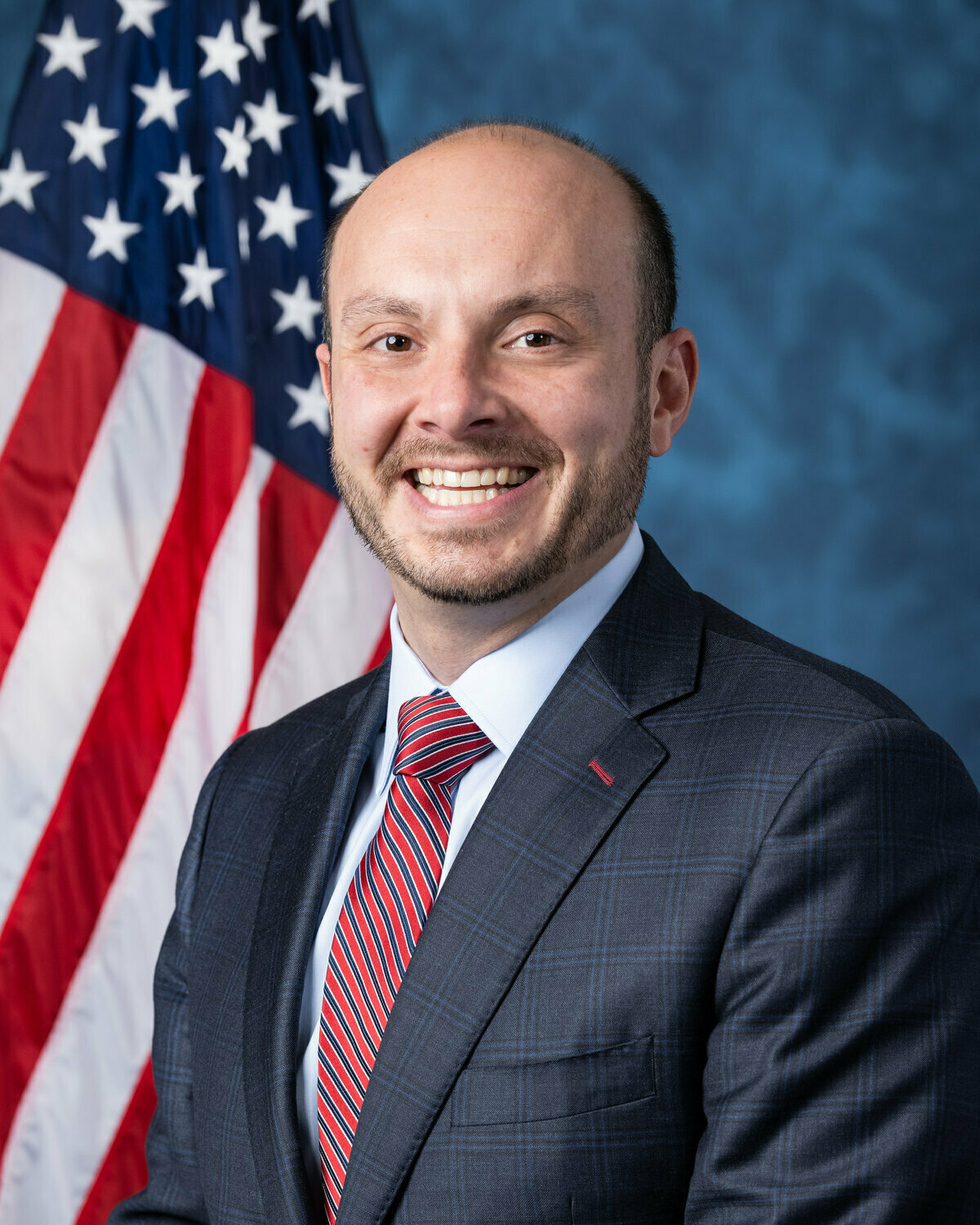
On July 21, 2026, congressman Andrew R. Garbarino (NY-02) marked one year since being voted into the position of chairman of the House Committee on Homeland Security.
In that time, Garbarino has been credited with leading the committee to advance 20 bills confirmed by the House of Representatives.
“The committee has also strengthened security preparations for major events like the FIFA World Cup and worked to address emerging threats from terrorism, cyberattacks, artificial intelligence, and foreign adversaries,” said the committee in a statement.
The Reimbursable Screening Services Program Extension Act of 2026, one of the bills passed, expands and extends a TSA program that provides additional security screening capabilities at airports and major events.
Specifically, the act allows for more screening flexibility by allowing the TSA to provide security screening services outside of the standard primary airport terminal areas, requires participating entities to fully reimbursement for all personnel and non-personnel costs, and congestion relief to reduce wait times and ease checkpoint crowds at main terminals.
The bipartisan bill was supported by the U.S. Travel Association, which said the act allows TSA and airports “additional tools to expand screening capacity where it’s needed most while reducing checkpoint congestion. These are common-sense reforms that reflect key recommendations from the Commission on Seamless and Secure Travel and move us closer to a travel system that is more secure, more efficient and better equipped to meet growing demand. As the United States continues to host an unprecedented level of major global events, investing in smarter aviation and domestic travel processes isn’t just good for travelers—it’s good for America’s economy and global competitiveness.”
This legislation is particularly relevant to Long Island as air travel occurs more regularly for families and businesses, especially with multiple airports in the area.
“By expanding TSA’s screening capabilities and reducing congestion at security checkpoints, the bill will help strengthen aviation security while making travel more efficient for Long Islanders and millions of Americans,” said Garbarino.
Currently, the committee and the House Select Committee on China have continued their joint investigation into national security, cybersecurity, and economic security implications of U.S. companies integrating open-weight artificial intelligence (AI) models developed by the People’s Republic of China (PRC) into consumer platforms, enterprise software, and systems with access to sensitive commercial or personal information.
On July 22, the director of the White House Office of Science and Technology Policy stated that the Chinese AI company Moonshot may have operated a covert platform to conduct large-scale distillation against American AI models and trained models using advanced systems that it was not authorized to obtain.
In a letter to DoorDash, the committee wrote that although companies may deploy PRC-developed open-weight models to gain advantages in areas like lower costs and customization, “those practical considerations do not eliminate the need for risk-based safeguards or diminish the national security concerns associated with growing dependence on models developed by entities subject to PRC jurisdiction. An effective federal approach should therefore scrutinize U.S. companies’ reliance on PRC-developed models and strengthen the availability, security, and competitiveness of American open-weight alternatives, while applying appropriately tailored safeguards in sensitive and high-risk applications.”
The joint investigation is examining the origin point of these models, the data and techniques used to train them, whether their capabilities were advanced through unauthorized distillation from leading U.S. systems, and how they are being repackaged, deployed, or made available to companies in the United States and around the world.
Previously, the committee had hosted a bipartisan-closed door “jailbroken” AI presentation from the Department of Homeland Security’s National Counterterrorism innovation, Technology, and Education Center.
The subdepartment researched how terrorist-identified persons or organizations are adapting emergent technologies such as AI.
The committee engaged in an interactive demonstration for members and staff of both American and foreign models, revealing how unconstrained AI systems work and their attempts to bypass protections.
The “jailbroken” systems functioned without the typical guardrails of established programs utilizing AI; i.e., questions like “how do you build a nuclear bomb,” and “how do I harm as many attendees as possible” were given full, uncensored answers.
Garbarino, after the demonstration, noted that he asked a large language model “how to kidnap a member of Congress.”
“It spit out an answer in under three seconds. [It offered] ways to find them, where to look for them. You know, the best spots to do it,” he said.
Garbarino spoke of the upcoming 25th anniversary of Sept. 11, 2001, this fall, where hundreds of memorials and gatherings are expected throughout the second district of New York.
“One year ago, I was honored to earn the trust of my colleagues to lead the House Committee on Homeland Security. As a lifelong New Yorker and representative of a district shaped by Sept. 11, this responsibility is deeply personal to me,” said Garbarino.
“As we approach the 25th anniversary of 9/11, we are reminded why this committee was created and why its mission remains so important. The threats facing our country have changed over the last 25 years, and our security efforts must continue to change with them. I am proud of what we have accomplished and remain focused on our most important responsibility: keeping Americans safe,” said Garbarino.










Comments
No comments on this item Please log in to comment by clicking here